
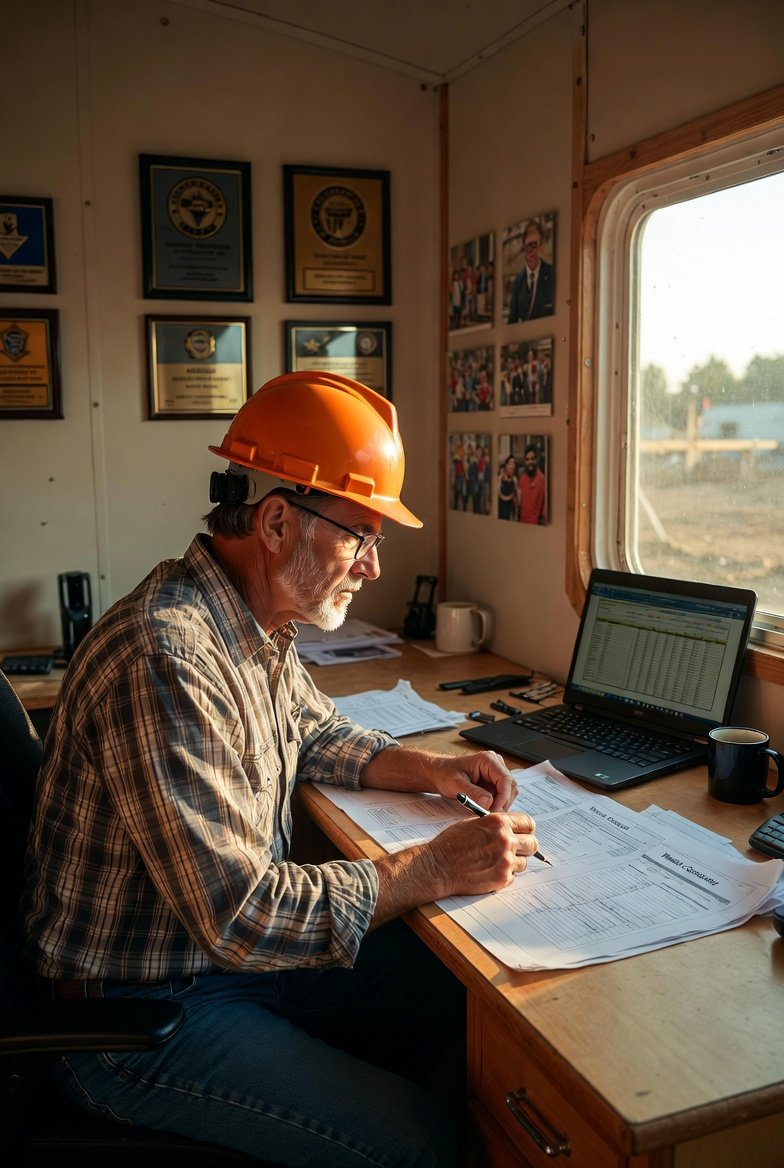
The weekly work plan is where the master schedule stops being a wall decoration and starts being a promise. Somebody up in the trailer drew a bar chart that says drywall finishes by the 14th. Your job as foreman is to look at that, look at your crew, look at the actual conditions on the floor, and decide what you can honestly get done between Monday and Friday. That decision is the whole ballgame. A good weekly work plan built by the people doing the work beats a beautiful CPM schedule built by someone who hasn't set foot on the deck.
This is a foreman's guide, so I'm going to skip the theory and talk about what actually happens between the planning meeting on Thursday and the walk-through on the following Friday.
What the weekly plan is actually for
The master schedule tells you what should happen. The weekly work plan tells you what will happen, because you've checked that the work is ready and committed to it out loud in front of the other trades. The gap between those two things is where projects die.
A weekly plan pulls a handful of activities out of the three-to-six week look-ahead, screens them for constraints, and turns them into specific assignments: this crew, in this area, doing this work, this week. If you can't say who, where, and what by the end of the planning meeting, you don't have a plan. You have a wish.
The discipline that makes this work is simple and unforgiving: only commit to work that is genuinely ready to go. Ready means the area is accessible, the prior trade is actually done (not "almost"), the materials are on site, the layout is approved, and you have the crew and the equipment. Everything else is a constraint that has to be cleared before that activity earns a spot on the plan.
Before the meeting: do your homework
The foremen who look sharp in the Thursday meeting are the ones who walked the work Wednesday afternoon. Don't show up cold and react to whatever the super throws on the board. Show up knowing your next two weeks.
- Walk the areas you're scheduled to hit. Is the deck poured and cured? Is the trade ahead of you really finished, or are they going to leave you a punch list to work around? Boots on the ground, not a status column.
- Count your crew for real. Not the headcount you're supposed to have — the headcount you'll actually have. Two guys on vacation and one who's flaky changes what you can promise. Know your skilled hands versus your bodies.
- Chase your own constraints. If you need an inspection signed off, a submittal approved, or a material delivery, start pushing on it now. Walking into the meeting and announcing you're blocked is not planning — it's an excuse you prepared early.
- Know what's coming at you. Look at the activities entering the look-ahead behind this week's work. If something two weeks out needs a long-lead material or a crane pick, that's your problem today, not in fourteen days when it's too late.
In the meeting: make honest commitments
Here's the hardest habit to build and the most valuable: say no when the answer is no. When the super asks if you can have the second floor closed in by Friday and you know it's a stretch, the wrong move is to nod because everyone's looking at you. You'll blow the commitment, you'll blow the trade behind you, and you'll have burned trust you can't easily buy back.
The right move is to make a commitment you'd bet your own money on, and to be loud about the constraints that are in the way. If your work depends on the mechanical rough being done and it's only half done, say so in the room, in front of the mechanical foreman, so it gets resolved right there instead of festering. That's the entire point of getting the last planners in one room — the people who will actually do the work sort out the handoffs face to face.
Before you commit to any activity, run it through a quick gut check:
- Can my crew actually do this work? Right skills, right numbers, this week.
- Is the duration honest? Not the optimistic number, not the number that makes the schedule close — what it really takes your crew, on this job, with these conditions.
- Are the prerequisites truly cleared? "It'll be done by Monday" from another trade is a hope, not a constraint that's resolved. Verify it.
- Is everything on hand? Materials, tools, equipment, approved drawings, and the information to build it correctly.
If any of those is shaky, the activity isn't ready. Flag it as a constraint and leave it off the committed plan until it's cleared. A shorter plan you'll actually hit is worth ten times a padded plan that collapses on Wednesday.
Build in buffer — and mean it
Every experienced foreman leaves himself a little room, and the good ones do it deliberately instead of by accident. Don't load your crew to 100% of a perfect week. Weather, a late delivery, a guy out sick, an inspector who wants to see one more thing — something always eats a few hours.
Two buffers matter most. First, a small time buffer inside your own week so one bad morning doesn't torpedo Friday's commitment. Second, buffer at the handoffs between trades. Frame-to-rough-in usually wants a day or two of slack for cleanup, layout verification, and inspection before the next trade crowds in on top of you. Rough-in-to-cover-up needs the inspection to actually pass first — never let the drywall crew close a wall on top of electrical or plumbing that hasn't been signed off, because opening it back up is a day you'll never get back and a conversation with the owner you don't want to have.
From plan to crew: the Monday briefing
Your crew doesn't read the schedule. They read you. The plan the super has in his software is worthless until you translate it into "here's where we're working today and here's what done looks like."
A tight morning briefing takes five minutes and saves hours. Tell them the area, the scope, the sequence, and the quality bar. Point out the trade you're handing off to so they understand why the work has to be clean and complete, not just close. Answer questions before the crew scatters, because the guy who's unsure at 7 a.m. is the guy building it wrong at 9 and tearing it out at 2.
This is also where a good look-ahead scheduling tool earns its keep for a foreman. When your crew leaders can pull the week's assignments up on a phone — which area, which activity, in what order — you stop being the single point of failure for information. A mobile view of the plan means the lead man in the far stairwell knows the sequence without radioing you every twenty minutes. That's the practical value of the software: not the dashboards, but getting the right work in front of the right hands.
When it starts to go sideways
It will. The measure of a foreman isn't whether commitments slip — it's what you do the moment you see one slipping.
- Raise the flag early. The worst time to announce you'll miss Friday is Friday. The moment a commitment looks at risk, tell the super, because early warning gives everyone room to re-sequence. Late warning gives them a crisis.
- Bring a fix, not just a complaint. "We're behind" is a report. "We're behind, but if I get two guys from the other crew Thursday, we hold the date" is leadership. Supers remember the foremen who show up with options.
- Write down why. When an activity misses, capture the real reason — late material, prerequisite not done, bad weather, design conflict, crew short. Those variance reasons are gold. Over a few weeks a pattern shows up, and the pattern is usually a fixable process problem, not a people problem.
Coordinating with the other trades
Most weekly-plan failures aren't about your crew working slow. They're about two trades wanting the same space at the same time, or a handoff that nobody actually agreed on. Trade-flow coordination is where the money is lost and found.
Get your shared-space conflicts settled in the planning meeting, not on the deck at 8 a.m. with two crews standing around. If the painters need the room you're finishing in, agree on the day and the hour the space transfers. Treat every handoff like a contract: I finish here, I clean up, I tell you it's ready, you verify it, you start. A clean handoff with a walk-and-verify beats an assumed one every single time, because the trade coming behind you inherits your mistakes.
The Friday review: score yourself honestly
At the end of the week, the number that matters is simple: of the activities you committed to, how many did you fully complete? That's your Percent Plan Complete, and it's the closest thing a foreman has to a batting average. Partial doesn't count — an activity is done or it isn't.
Resist the urge to fudge it. The point of PPC isn't to grade you; it's to find the constraints that keep killing your weeks. If you scored 60% and half your misses were "material showed up late," you've just found the thing to fix. Score yourself soft and you learn nothing. A foreman consistently landing his commitments in the 85%-plus range is running a plan that other trades can build around, and that reputation is worth more than any bonus.
Getting better every week
The whole system compounds. Your variance reasons this week make next week's plan smarter. Your crew's real production numbers — how long it actually took to hang that much rock or set that much pipe — make your future duration estimates honest instead of hopeful. Six weeks of that data and you stop guessing.
A few habits separate the foremen who improve from the ones who repeat the same bad week forever:
- Keep your status current through the day, not from memory Friday afternoon. A quick photo of completed work beats a vague recollection when someone asks what happened.
- Track your own crew's production rates so your estimates get sharper each month.
- Treat every missed commitment as information, never as an excuse to hunt for. The reason is the lesson.
Own your word
Strip away the software, the meetings, and the acronyms, and the foreman's job in weekly planning comes down to one thing: make commitments you can keep, and keep the commitments you make. The crews that run this discipline finish jobs earlier, fight less, and get called back. The superintendent learns he can build the whole project's rhythm around your word.
That's a reputation you carry from job to job. Screen the work before you commit, protect a little buffer, warn early when something's wrong, and score yourself honestly on Friday. Do that week after week and you become the foreman every super wants on the next project — not because you never had a bad week, but because when you said you'd have it done, it was done.