
Accountability: The Missing Ingredient
Many construction projects have schedules. Few have accountability. The schedule says rough electrical completes Thursday, but when Thursday comes and it's not done, what happens? Often nothing—just a quiet adjustment and move on. This lack of accountability erodes schedule reliability until no one takes deadlines seriously. Construction scheduling software can transform accountability when used correctly, creating a culture where commitments matter.
Accountability isn't about blame or punishment. It's about creating an environment where people honor their commitments because they understand those commitments matter. Construction management software provides the visibility and documentation that makes accountability possible and fair.
How Software Enables Accountability
Construction project management software creates accountability through several mechanisms:
Visible Commitments
When a subcontractor's scheduled work is visible to everyone in the contractor scheduling software, the commitment is public. There's no "I thought I had until next week" when the schedule clearly shows Thursday.
Documentation
The software records what was scheduled and when. If disputes arise about what was agreed, best construction scheduling software provides the facts.
Historical Tracking
Over time, patterns emerge. Which trades consistently meet commitments? Which don't? Construction scheduling software data reveals these patterns objectively.
Real-Time Visibility
Everyone can see whether work is progressing as scheduled. There's no hiding behind "we're working on it" when progress isn't visible in construction management software.
Establishing Accountability Practices
Software alone doesn't create accountability—practices do:
Explicit Commitment Capture
When scheduling work in your construction project management software, make commitments explicit. "ABC Electric commits to complete rough-in in Unit 5 by Thursday." Say it out loud, record it in the system.
Regular Progress Review
Review schedule adherence regularly—daily for active work, weekly for lookahead items. Use your contractor scheduling software to compare plan versus actual systematically.
Address Misses Promptly
When commitments aren't met, address it immediately. Not with punishment, but with understanding: what happened? What can we learn? How do we prevent recurrence? Best construction scheduling software data supports these conversations.
Recognize Success
Accountability works both ways. When teams consistently meet commitments, acknowledge it. Recognition reinforces the behavior you want.
Accountability with Subcontractors
Subcontractor accountability requires specific approaches:
Shared Schedule Access
Subcontractors can't be held accountable for schedules they don't know about. Ensure they have access to your construction scheduling software and know how to use it.
Coordination Meeting Commitments
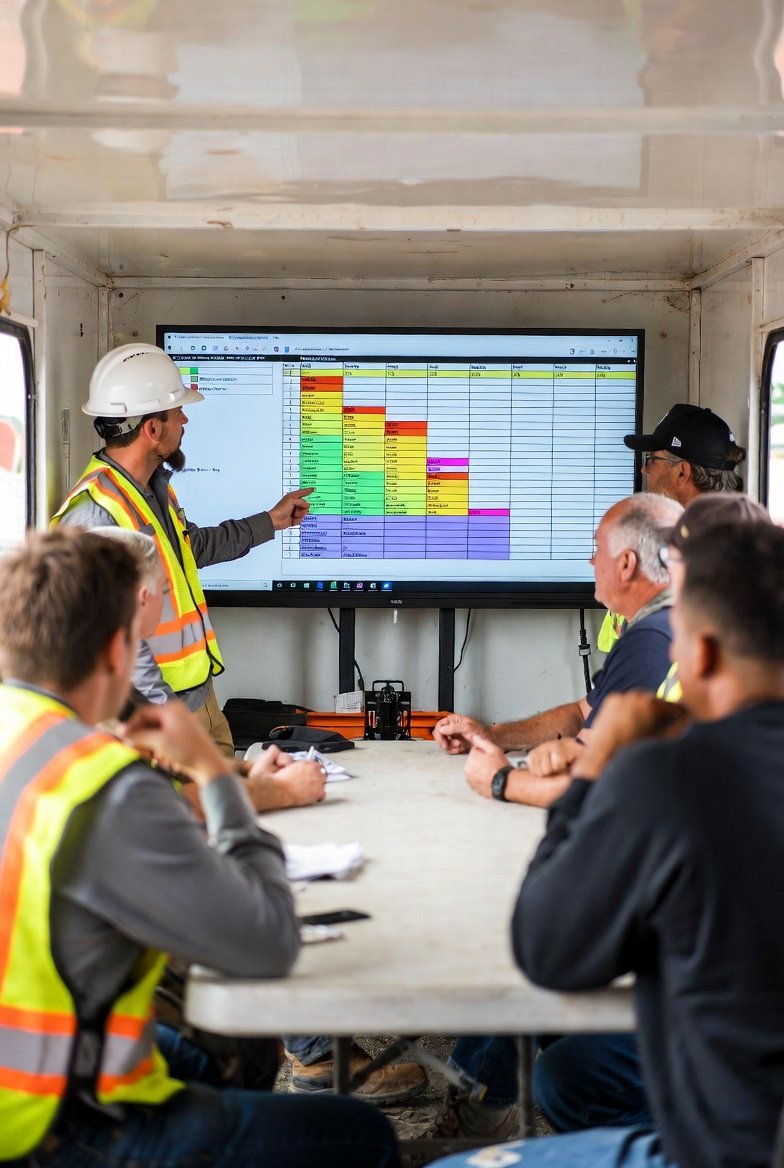
Use coordination meetings to capture commitments in real-time. Project the construction management software and record agreements as they're made.
Performance Tracking
Track subcontractor schedule adherence over time using data from your construction project management software. This objective data supports performance conversations and influences future work awards.
Fair Treatment
Accountability must be fair. If delays result from factors outside subcontractor control—owner changes, preceding trade delays, weather—the contractor scheduling software should document this context.
Internal Team Accountability
Your own team needs accountability too:
Superintendent Accountability
Superintendents are accountable for schedule accuracy and daily updates. If the best construction scheduling software isn't current, that's a superintendent accountability issue.
PM Accountability
Project managers are accountable for overall schedule health—lookaheads maintained, milestones tracked, risks identified. Construction scheduling software visibility exposes PM performance.
Estimating Feedback
Accountability extends to estimating. When actual durations consistently differ from estimates, that feedback should flow back to improve future bids.
The Accountability Conversation
When accountability issues arise, handle them constructively:
Lead with Facts
Open with objective data from your construction management software. "The schedule shows rough plumbing was committed for completion by Wednesday. Today is Friday and it's not complete."
Seek Understanding
Ask questions before assigning blame. "Help me understand what happened." Often there are legitimate explanations that construction project management software should have captured.
Focus on Future
What matters most is preventing recurrence. "What can we do differently so this doesn't happen again?"
Document Outcomes
Record the conversation outcome in your contractor scheduling software. If patterns repeat, you have documentation of previous discussions.
Metrics for Measuring Accountability
Track these metrics from your best construction scheduling software:
Schedule Adherence Rate
What percentage of activities complete on or before their scheduled date? Track this by trade, by subcontractor, by project.
Variance Magnitude
When activities miss their dates, by how much? One day versus one week indicates different accountability levels.
Root Cause Distribution
Categorize schedule misses by cause. What percentage are subcontractor performance versus external factors? Construction scheduling software notes should capture this.
Trend Analysis
Is schedule adherence improving over time? Are specific subcontractors improving or declining?
Common Accountability Pitfalls
Avoid these mistakes:
Punishment Culture
If people fear punishment for schedule misses, they'll hide problems instead of raising them early. Construction management software visibility should enable problem-solving, not gotcha moments.
Ignoring Context
Holding people accountable for factors beyond their control is unfair and counterproductive. Your construction project management software should document context.
Selective Accountability
If some people are held accountable and others aren't, the system loses credibility. Apply accountability consistently.
Data Without Action
Collecting contractor scheduling software data but never acting on it teaches people that accountability is theoretical, not real.
Building an Accountability Culture
Long-term accountability requires cultural change:
Leadership Modeling
Leaders must demonstrate accountability themselves. When leadership misses commitments, they should acknowledge it and explain.
System Trust
People must trust that the best construction scheduling software is accurate and fair. Inaccurate schedules undermine accountability.
Reasonable Expectations
Schedules must be realistic. Holding people accountable to impossible schedules damages trust.
Continuous Improvement
Accountability should drive improvement, not just measurement. Use construction scheduling software data to identify and address systemic issues.
Conclusion
Construction scheduling software provides the foundation for accountability—visibility, documentation, and tracking. But software alone doesn't create accountability. You need practices: explicit commitments, regular review, prompt addressing of misses, and recognition of success.
Build accountability with subcontractors and your internal team. Handle accountability conversations constructively. Track meaningful metrics. Avoid pitfalls that undermine trust.
When accountability becomes cultural, construction management software commitments become reliable. Projects finish on time because people know their commitments matter. That's the power of accountability enabled by construction project management software.