
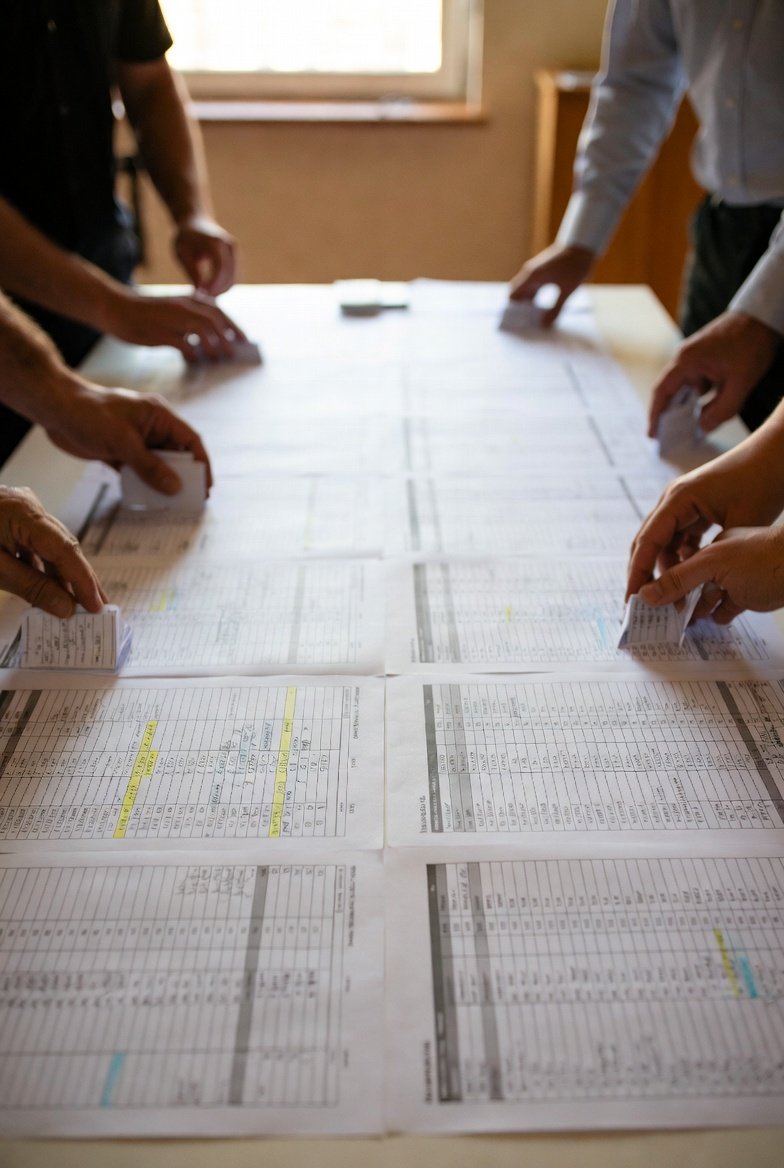
Walk any jobsite where the look-ahead has gone stale and you'll see the same tells. The wall by the trailer shows a three-week plan dated from a month ago. Two subs are stacked in the same room because nobody moved the sequence when the slab pour slipped. The super swears the schedule is "basically right," which is site-speak for wrong. Ask who owns it and you get shrugs. That shrug is the whole problem.
A rolling look-ahead is not a document. It's a living process that has to be fed, corrected, and reconciled against reality every single week. Documents can sit in a drawer. Processes need somebody whose name is on them, or they quietly die. This is the part teams get wrong most often — not the format of the schedule, not the software, but the simple fact that no one person is accountable for keeping it true.
Why an ownerless schedule rots
Rot is the right word because it happens gradually and then all at once. Nobody decides to abandon the look-ahead. It just falls a day behind, then three, then it's describing a project that no longer exists. Here's the mechanism, and it's worth understanding because it explains why "everyone owns it" always fails.
When responsibility is shared across the whole team, the marginal cost of one person skipping an update is basically zero — someone else will surely catch it. Except everyone reasons the same way, so nobody catches it. This is the diffusion-of-responsibility trap, and it's not a character flaw in your people. It's a structural feature of shared accountability. The fix isn't to lecture the team about buy-in. The fix is to put one name on the schedule.
The second failure mode is competing priorities. Schedule maintenance never screams. A missed inspection screams, a short delivery screams, a subcontractor melting down in the trailer screams. Updating the look-ahead just sits there quietly being important, and quiet-but-important always loses to loud-but-urgent unless it's explicitly somebody's job. Give it an owner and it gets a defended slot in someone's week. Leave it orphaned and it gets whatever's left over, which is nothing.
What the owner actually does
"Owning the schedule" gets thrown around like it's obvious, so let's make it concrete. The owner isn't the person who does all the work — they're the person who guarantees the work happens and the plan stays honest. Practically, that's four jobs:
- Reconcile the plan against the field. Every week, walk it or get trustworthy eyes on it, and make the look-ahead match what's actually built. A schedule that shows drywall complete on a floor that's still framed is worse than no schedule, because people make commitments off it.
- Drive constraints to resolution. Log every constraint — missing submittals, undelivered material, undone predecessor work, permits, access — with a name and a promised date, and chase each one until it clears. A constraint log that only records problems without owners and dates is a to-do list nobody reads.
- Coordinate the sequence. When one activity slips, the owner adjusts what depends on it before two trades collide. This is where trade-flow thinking earns its keep — you can see downstream what a slipped pour does to the crews stacked behind it.
- Communicate the changes. A plan that changes silently is a trap. When the owner moves an activity, the affected foremen and subs hear about it that day, not at Monday's meeting when they show up with a crew and nowhere to work.
The superintendent is usually the right owner
On most commercial and multi-family jobs, the project-level look-ahead belongs to the superintendent, and for good reasons that are worth naming.
The super has the field knowledge. They know that the ceiling grid can't start until the overhead MEP is inspected and signed, that the mason needs the scaffold struck before the punch crew can get to the exterior, that "the inspector comes Thursday" really means "sometime Thursday if we're lucky, so don't schedule anything tight behind it." That embedded reality is exactly what keeps a look-ahead from becoming fiction.
The super also already sits at the center of trade coordination. Owning the schedule isn't a new hat — it's the formal version of what they do all day. And critically, they have the authority to make a call stick. When the schedule says the electricians go before the insulators, the super can make that happen. A dedicated scheduler with a beautiful plan and no authority just produces beautiful plans that the field ignores.
The catch: on a big enough job, a super buried in day-to-day firefighting can't also be the one clicking through updates every evening. That's fine. Ownership and data entry are different things. The super stays the accountable owner — the plan is theirs, the decisions are theirs — while a project engineer or field scheduler handles the mechanical updating under their direction. Never let that split blur into "the scheduler owns it," because then you've handed the plan to someone who can't enforce it.
Owners at every level, not just the top
Project-level ownership doesn't mean one person carries the whole plan on their back. A healthy look-ahead has nested owners, each responsible for their slice:
- Project level: the superintendent owns the overall look-ahead and the master sequence.
- Trade level: each subcontractor owns their portion — their durations, their crew loading, their commitments. A sub who just gets handed a schedule is a sub who will blame the schedule. A sub who committed to their own dates in the room owns the miss.
- Crew level: foremen own their crew assignments and, just as importantly, the daily reality check — is what the plan assumes actually true on the deck this morning?
Foreman input is the part teams underuse. The foreman is the first to know the risers aren't where the drawings show them, that the material staged for Tuesday is short, that the crew coming off the last job won't arrive until Wednesday. If your process doesn't have a clean, low-friction way for that field intelligence to reach the plan, you're flying on yesterday's information. A mobile tool that lets a crew leader flag a constraint or confirm progress from the deck — instead of waiting to remember it at a meeting two days later — closes that gap. This is exactly the kind of thing LookAheadWall's crew companion is built for, but the principle holds no matter what you use: the field has to be able to talk back to the plan.
Ownership needs authority, or it's just blame
Here's a trap I've watched sink good people. A project makes someone "responsible for the schedule" but gives them no authority to change sequences, reallocate access, or hold a sub to a commitment. That's not ownership. That's designating a scapegoat. When the schedule fails, everyone points at the person whose name was on it, even though they were never empowered to make it succeed.
Real ownership pairs accountability with three kinds of authority: the authority to make sequencing decisions, the authority to coordinate trades and reallocate work areas, and a clear escalation path for the stuff above the owner's pay grade — GMP-level changes, contractual disputes, anything that needs the PM or the owner's rep. Write those boundaries down at the start of the job. The worst time to discover an owner has no teeth is the week a critical activity slips.
This is where the project manager comes in — not as a second schedule owner, but as backup. The PM funds the owner's time, backs their calls when a sub pushes, and handles the external and contractual conversations the super shouldn't be dragged into. Good PM support is what lets the field owner spend their attention on the plan instead of on politics.
What it costs in time — be honest about it
Underfunding the owner's time is how well-intentioned ownership still fails. If you assign the schedule to someone already at 110 percent and add no relief, you haven't solved anything. Set realistic expectations up front.
A rolling look-ahead in a Last Planner-style rhythm typically wants a few minutes of attention most days — logging progress and catching new constraints while they're fresh — plus a more substantial weekly block to reconcile the plan, update the three-to-six-week window, and prep the weekly work plan. Then there's the weekly planning meeting itself, which needs a real facilitator, not just a room. Somebody has to run the make-ready look-ahead, secure the commitments, and — the step everyone skips — track Percent Plan Complete and lead the variance conversation on why last week's commitments missed. Skipping the variance analysis is how teams keep making the same mistake every week and calling it bad luck.
None of this is huge. But it's real, recurring, defended time, and if it isn't budgeted, it evaporates.
Make the transition survivable
Owners change. Supers rotate to the next job, engineers move up, people leave. If the whole schedule lives in one person's head, their departure is a cliff — the plan goes dark for two weeks while the replacement reconstructs what everyone already knew. Two cheap habits prevent that. First, keep the process documented: how updates flow, where the constraint log lives, who commits to what and when. Second, do a real handoff, not a hallway "you've got the schedule now." Walk the incoming owner through the live plan, the open constraints, and the personalities before the old owner is gone. A schedule that only one human can maintain is a fragile schedule, however good that human is.
How you know ownership is working
You don't need a dashboard full of vanity metrics. Three questions tell you almost everything:
- Is it current? Pick a random activity and check it against the field. If the plan and the deck disagree, ownership has slipped, full stop.
- Are constraints clearing? A constraint log that just grows means problems are being recorded, not resolved. Resolution is the whole point.
- Is PPC trending up? If the crews are hitting more of their weekly commitments over time, the plan is getting more reliable, which means somebody is doing the work of making it reliable.
Good scheduling software makes ownership lighter to carry — notifications that surface what needs the owner's attention, a shared view so subs update their own slice, dashboards that show current status without a manual roll-up. It removes friction. What it can't do is care about the plan for you. No tool has ever saved a look-ahead that nobody owned; it just made the neglect easier to see.
So before you argue about formats or which app to buy, settle the human question first. Put one name on the project look-ahead. Give that person the field knowledge, the authority, the time, and the backup to keep it honest. Nest real owners under them at the trade and crew level. Do that, and the schedule becomes something the whole job can actually plan against. Skip it, and you'll be back at that stale wall by the trailer, shrugging at a plan for a project that no longer exists.