
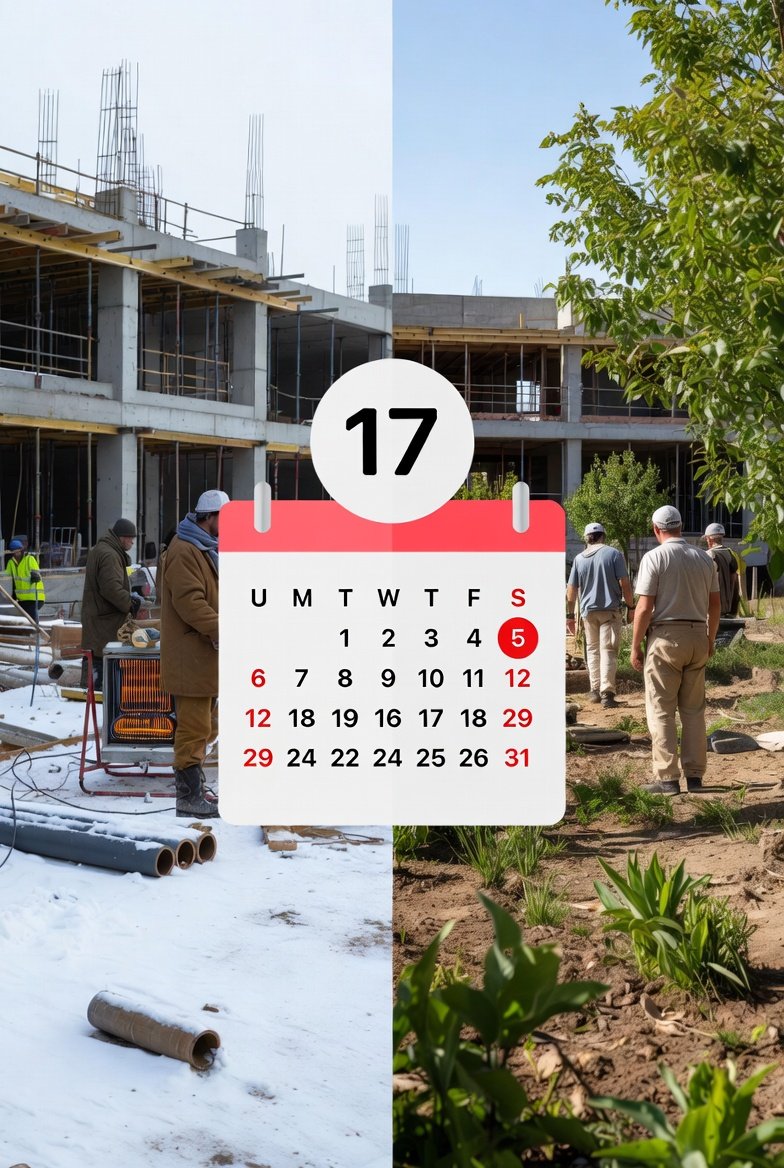
The Seasonal Reality of Construction
Construction doesn't happen in a climate-controlled environment. Rain delays earthwork. Cold stops concrete pours. Snow halts exterior work. Heat exhaustion limits productivity. Seasonal factors affect every project, yet many schedules ignore these realities until weather forces attention. Smart contractors build seasonal awareness into their construction scheduling software from day one.
Understanding seasonal patterns and planning accordingly separates professional schedulers from amateurs. When you account for weather windows in your construction management software, you create realistic schedules that clients can trust. Overpromising based on best-case weather leads to missed deadlines and damaged relationships.
Climate Zone Considerations
Seasonal impacts vary by geography:
Northern Climates
Winter creates a distinct construction season. Frozen ground prevents excavation. Cold temperatures limit concrete work. Snow makes exterior work difficult. Your construction project management software must account for shortened working seasons.
Southern Climates
Summer heat limits productivity and creates safety concerns. Hurricane season threatens coastal projects. Your contractor scheduling software should reflect these regional realities.
Wet Climates
Prolonged rainy seasons affect earthwork, foundation work, and any moisture-sensitive activities. Build rain day assumptions into best construction scheduling software.
Arid Climates
Extreme heat affects both worker productivity and material behavior. Concrete curing, asphalt paving, and other temperature-sensitive activities require seasonal awareness in construction scheduling software.
Weather-Sensitive Activities
Different activities have different sensitivities:
Earthwork
Soil moisture content affects workability. Frozen ground can't be excavated. Saturated soils can't be compacted. Track earthwork weather windows in construction management software.
Concrete Work
Temperature extremes affect concrete placement and curing. Cold weather requires protection measures; hot weather requires accelerated finishing. Your construction project management software should schedule concrete appropriately.
Steel Erection
High winds prevent crane operations. Winter conditions require additional safety measures. Track weather constraints in contractor scheduling software.
Exterior Finishes
Painting, stucco, exterior caulking, and similar finishes have temperature and humidity requirements. Your best construction scheduling software should show exterior finish windows.
Roofing
Many roofing materials have temperature limits. Roofing in rain creates leaks. Schedule roofing during favorable windows in construction scheduling software.
Historical Weather Analysis
Use historical data to inform scheduling:
Average Conditions
Historical averages show typical conditions by month. Build these into baseline schedules in your construction management software.
Variability Ranges
Averages don't capture year-to-year variability. Consider best-case and worst-case scenarios in your construction project management software.
Lost Day Factors
How many days per month are typically lost to weather? Apply these factors when estimating durations in contractor scheduling software.
Extreme Events
Major weather events—hurricanes, floods, extended freezes—require contingency beyond normal weather allowance. Best construction scheduling software should include event contingency.
Schedule Alignment Strategies
Align work to favorable seasons:
Start Date Selection
Choose project start dates that align weather-sensitive work with favorable seasons. If interior work must happen in winter, start earlier to get exterior closed in before cold weather.
Activity Sequencing
Where flexibility exists, sequence activities to maximize favorable weather utilization. Your construction scheduling software should help evaluate sequencing alternatives.
Weather Buffer Placement
Place schedule buffers around weather-sensitive phases. Construction management software should show where weather risk is highest.
Acceleration Planning
Plan for acceleration during favorable weather to build buffer for unfavorable periods. Track productivity by season in construction project management software.
Seasonal Labor Considerations
Labor availability varies seasonally:
Peak Season Competition
Good weather means all projects want labor simultaneously. Your contractor scheduling software should account for labor competition during peak seasons.
Skilled Trade Availability
Some trades migrate seasonally. Know when your trades are available and schedule accordingly using best construction scheduling software.
Productivity Variations
Worker productivity varies with conditions. Extreme heat reduces output; comfortable weather increases it. Construction scheduling software should reflect seasonal productivity factors.
Overtime Constraints
Overtime during long summer days is more practical than overtime in short winter days. Consider daylight hours in construction management software.
Material Considerations
Materials also have seasonal factors:
Delivery Reliability
Winter storms disrupt deliveries. Your construction project management software should include delivery contingency for winter months.
Storage Requirements
Some materials require protection from temperature extremes or moisture. Plan storage in contractor scheduling software.
Lead Time Variations
Material lead times may vary seasonally as suppliers face demand fluctuations. Best construction scheduling software should adjust lead times by season.
Multi-Year Project Planning
Large projects spanning multiple seasons require special attention:
Phase Planning
Plan major phases to align with seasonal windows. If foundation work must happen in winter, what provisions are needed? Your construction scheduling software should show phase-season alignment.
Winter Work Planning
If winter work is unavoidable, plan protection measures—temporary heat, enclosures, curing blankets. Include these in construction management software.
Season Transition Contingency
The transition between seasons often brings worst-case conditions—spring thaw, fall rains. Build extra contingency around transitions in construction project management software.
Weather Monitoring Integration
Active weather monitoring supports scheduling:
Forecast Integration
Use weather forecasts to adjust near-term schedules. Contractor scheduling software that integrates forecasts enables proactive planning.
Decision Triggers
Define weather thresholds that trigger schedule changes. When does forecast rain mean canceling concrete pours? Document these in best construction scheduling software.
Early Warning Systems
Subscribe to weather alerts for project locations. Construction scheduling software should support weather-driven notifications.
Communicating Seasonal Factors
Help stakeholders understand seasonal realities:
Owner Education
Owners may not understand weather impacts on construction. Use construction management software to show how seasonal factors affect the schedule.
Realistic Commitments
Don't make schedule commitments that ignore weather reality. Construction project management software helps create defensible schedules.
Weather Delay Documentation
Document weather delays as they occur. Your contractor scheduling software provides the record for delay claims.
Conclusion
Seasonal factors are fundamental to construction scheduling. Ignoring them creates unrealistic schedules that damage credibility and cause disputes. Embracing them in your best construction scheduling software creates schedules that clients can trust.
Build seasonal awareness into every schedule you create. Know your local climate patterns. Understand which activities are weather-sensitive. Plan start dates and sequences that maximize favorable weather utilization. Construction scheduling software that incorporates these factors separates professional schedulers from amateurs.
The construction industry operates in the real world, not a controlled environment. Construction management software that acknowledges seasonal reality delivers better outcomes for everyone involved.