
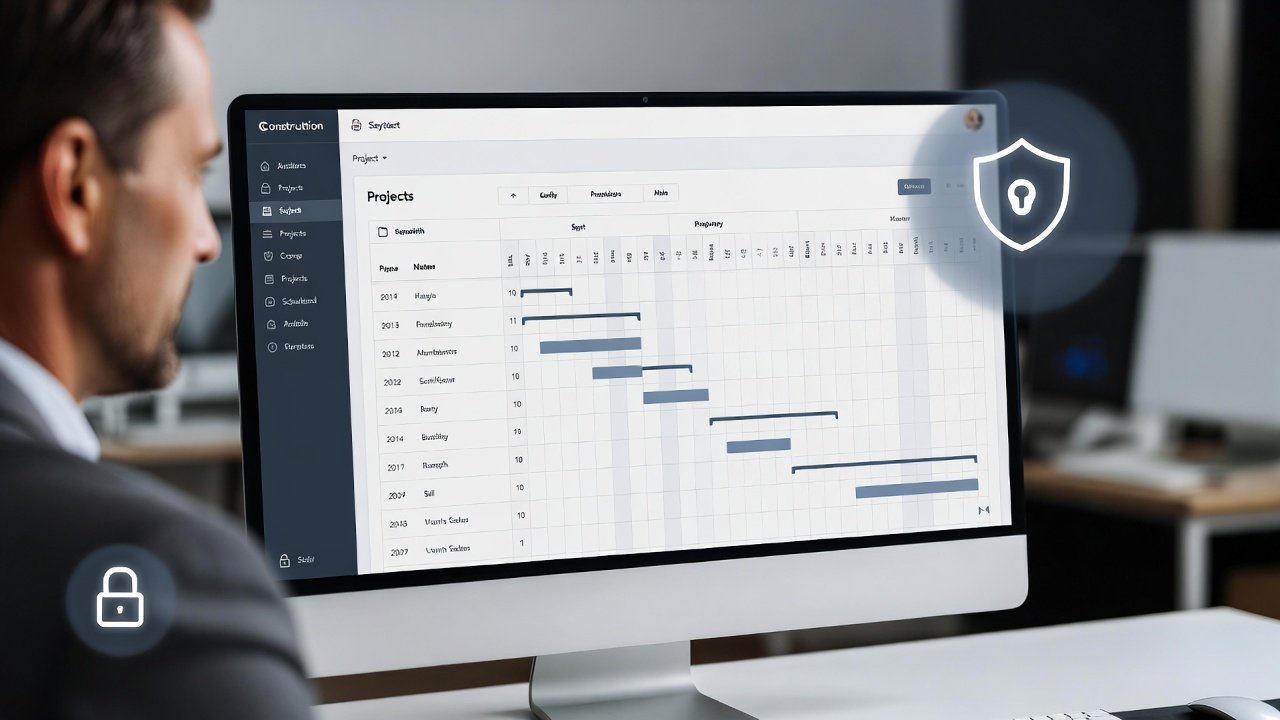
Why Security Matters for Scheduling Data
Construction schedules contain sensitive information that competitors, criminals, and other bad actors might want to access. Project timelines reveal business strategies. Resource allocation shows capacity. Client information requires protection. Cost data could advantage competitors. As construction scheduling software moves to the cloud and mobile devices, security becomes increasingly critical.
Beyond confidentiality, schedule data integrity matters. If someone maliciously changes your schedule, the consequences could be severe—missed deadlines, wasted resources, damaged relationships. Construction management software must protect data from unauthorized modification as well as unauthorized access.
Understanding Security Risks
Recognize the risks facing your schedule data:
Unauthorized Access
People without authorization viewing schedule information. This could be competitors, former employees, or hackers. Construction project management software must control who sees what.
Data Theft
Active theft of schedule data for competitive advantage or other purposes. Contractor scheduling software must prevent extraction of sensitive data.
Data Manipulation
Malicious changes to schedule data—altering dates, deleting activities, changing assignments. Best construction scheduling software must prevent unauthorized changes.
Data Loss
Accidental or malicious deletion of schedule data. Construction scheduling software must have backup and recovery capabilities.
Compliance Violations
Failure to protect data as required by contracts, regulations, or company policy. Construction management software must support compliance requirements.
Access Control Fundamentals
Control who can access schedule data:
Authentication
Verify user identity before granting access. Strong passwords, multi-factor authentication, and single sign-on are common approaches in construction project management software.
Authorization
Define what authenticated users can do. Role-based access control in contractor scheduling software assigns permissions based on job function.
Principle of Least Privilege
Give users only the access they need. A subcontractor foreman doesn't need access to all projects. Best construction scheduling software supports granular permissions.
Access Review
Regularly review who has access and revoke unnecessary permissions. Construction scheduling software should facilitate access audits.
Data Protection Measures
Protect data at rest and in transit:
Encryption at Rest
Schedule data stored in databases and files should be encrypted. Construction management software vendors should confirm encryption practices.
Encryption in Transit
Data moving between devices and servers should be encrypted. HTTPS/TLS is the standard for construction project management software.
Secure Backups
Backup data should be encrypted and stored securely. Contractor scheduling software backup practices matter for recovery and security.
Data Retention
Define how long data is retained and when it's deleted. Best construction scheduling software should support retention policies.
Cloud Security Considerations
Cloud-based construction scheduling software raises specific security questions:
Vendor Security Practices
Evaluate vendor security certifications, audits, and practices. SOC 2 certification indicates independent security verification for construction management software providers.
Data Location
Know where your data is physically stored. Some projects require data to remain in specific jurisdictions. Construction project management software vendors should disclose data location.
Multi-Tenancy
Cloud systems often store multiple customers' data together. Understand how contractor scheduling software isolates your data from others.
Service Availability
Cloud outages affect access to schedule data. Understand uptime guarantees and what happens during outages with best construction scheduling software.
Mobile Security
Mobile access creates additional security considerations:
Device Security
Devices accessing construction scheduling software should have security protections—screen locks, encryption, remote wipe capability.
App Security
Mobile apps should use secure connections and not store sensitive data unnecessarily. Evaluate construction management software app security practices.
Lost Device Response
Plan for lost or stolen devices. Can you remotely revoke access? Construction project management software should support access revocation.
Network Security
Public WiFi poses risks. Contractor scheduling software should encourage or require secure connections.
User Security Practices
Technology alone doesn't ensure security:
Password Management
Users should use strong, unique passwords for best construction scheduling software. Password managers help.
Phishing Awareness
Users should recognize phishing attempts targeting construction scheduling software credentials.
Access Responsibility
Users should understand their responsibility to protect access. Sharing credentials undermines construction management software security.
Reporting
Users should report security concerns promptly. Establish clear reporting channels for construction project management software issues.
Subcontractor Access Security
Subcontractors need schedule access but introduce security considerations:
Limited Access
Give subcontractors access only to their relevant schedule information. Contractor scheduling software should support limited views.
Access Termination
Remove subcontractor access when their work completes. Best construction scheduling software should facilitate timely access removal.
Subcontractor Security
Consider subcontractor security practices. Their weak security could compromise your construction scheduling software data.
Contract Requirements
Include security requirements in subcontracts for handling construction management software access and data.
Audit and Monitoring
Monitor for security issues:
Access Logging
Log who accesses what and when. Construction project management software should maintain access logs.
Change Logging
Log schedule changes with who made them and when. Contractor scheduling software audit trails support accountability.
Anomaly Detection
Watch for unusual access patterns that might indicate compromise. Best construction scheduling software may include anomaly alerts.
Regular Audits
Periodically review security configurations and access permissions. Construction scheduling software should facilitate security audits.
Incident Response
Plan for security incidents:
Response Plan
Have a plan for responding to security incidents involving construction management software.
Vendor Communication
Know how to report security issues to your construction project management software vendor.
Recovery Procedures
Know how to recover from data loss or corruption in contractor scheduling software.
Notification Requirements
Understand when you must notify clients or authorities about security incidents affecting best construction scheduling software data.
Evaluating Vendor Security
When selecting construction scheduling software, evaluate security:
Security Certifications
Look for SOC 2, ISO 27001, or similar certifications.
Security Documentation
Request security white papers or documentation from construction management software vendors.
Security Questionnaires
Use standard security questionnaires to evaluate construction project management software vendors.
Incident History
Ask about past security incidents and how they were handled.
Conclusion
Schedule data deserves security attention. Contractor scheduling software contains sensitive information that must be protected from unauthorized access, modification, and loss.
Implement appropriate controls: access management, data encryption, cloud security evaluation, mobile security, user training, and monitoring. Choose best construction scheduling software from vendors who take security seriously.
Security is ongoing. Technology, threats, and requirements evolve. Regular review of construction scheduling software security practices ensures continued protection of your valuable project data.