
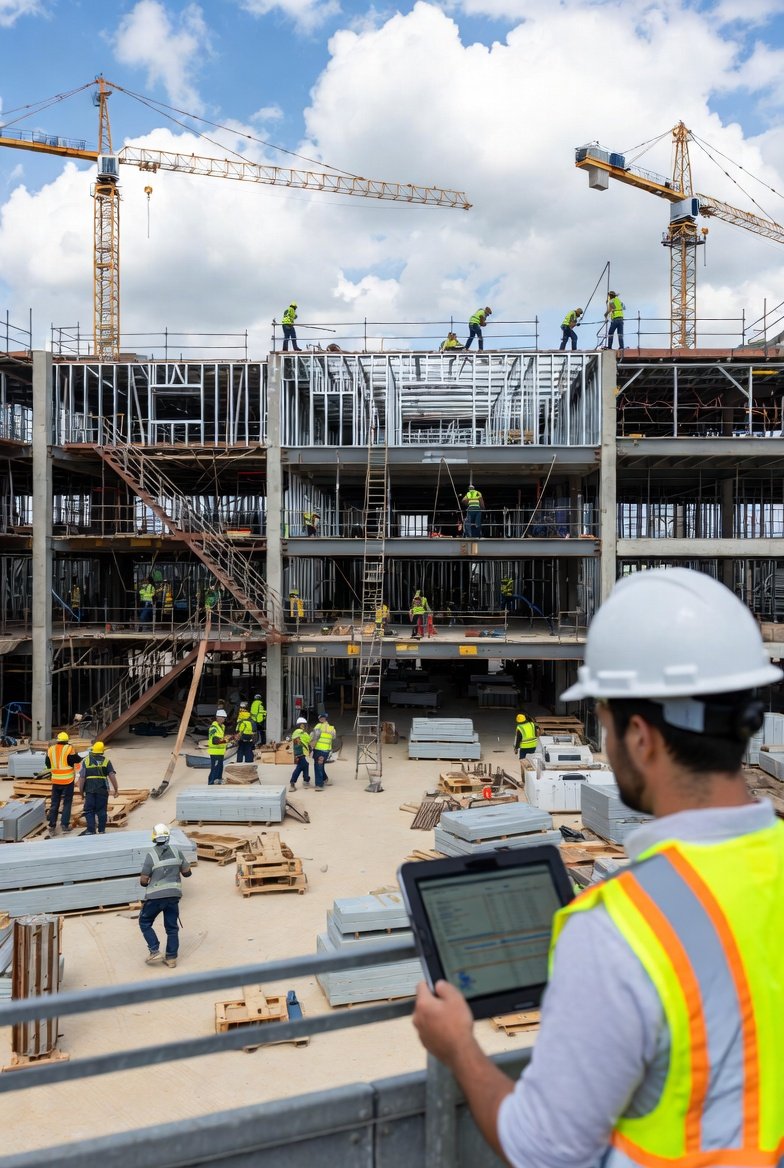
The Commercial Construction Landscape
Commercial construction operates in a different league than residential work. Office buildings, retail centers, healthcare facilities, and industrial complexes demand a level of scheduling precision that simply isn't possible with manual methods. When you're coordinating hundreds of workers across dozens of trades, managing millions of dollars in equipment and materials, and facing substantial liquidated damages for delays, construction scheduling software isn't optional—it's survival gear.
The commercial sector has embraced construction management software more completely than any other segment of the industry. General contractors bidding on commercial projects are expected to demonstrate sophisticated scheduling capabilities. Owners require detailed schedules as contract deliverables. Subcontractors expect digital coordination. In this environment, mastering construction project management software is essential for competitive success.
Scale Creates Complexity
The fundamental challenge of commercial construction is scale. Consider the differences:
More Trades to Coordinate
A custom home might involve 15-20 subcontractors. A commercial office building can easily involve 40-60 specialty contractors. Each has their own crews, schedules, and priorities. Contractor scheduling software creates the visibility needed to coordinate this complexity without endless phone calls and meetings.
Larger Work Areas
Commercial projects span multiple floors, buildings, or phases. Different crews work in different areas simultaneously. Your best construction scheduling software must handle location-based scheduling that shows who is working where.
Longer Durations
While a house might take 4-6 months, commercial projects often span 12-24 months or more. Maintaining schedule accuracy over these extended timelines requires systematic approaches that only construction scheduling software can provide.
Higher Financial Stakes
Commercial contracts commonly include liquidated damages—real financial penalties for late delivery. When you're facing thousands of dollars per day in potential penalties, the precision of construction management software pays for itself many times over.
Multi-Phase Schedule Management
Commercial projects typically divide into distinct phases, each requiring different scheduling approaches:
Site Development
Early work includes excavation, utilities, foundations, and structural steel or concrete. This phase is weather-dependent and establishes the baseline for everything that follows. Your construction project management software should track weather impacts and automatically adjust dependent activities.
Core and Shell
The building envelope—structure, exterior walls, roofing, and basic MEP infrastructure—represents the core construction phase. Multiple crews work simultaneously across floors and areas. Contractor scheduling software with location-based views shows this complex coordination clearly.
Interior Buildout
Tenant improvements, finishes, and fit-out work often occur while base building work continues elsewhere. Managing these parallel tracks requires the sophisticated coordination capabilities of best construction scheduling software.
Commissioning and Closeout
Testing systems, obtaining occupancy permits, and addressing punch lists require careful scheduling to meet move-in dates. Construction scheduling software helps track the hundreds of items that must be completed before turnover.
Owner and Stakeholder Requirements
Commercial owners have sophisticated schedule expectations:
Contractual Schedule Deliverables
Commercial contracts specify schedule requirements: baseline schedules, monthly updates, recovery schedules when delays occur. Your construction management software must generate these deliverables efficiently.
Milestone Accountability
Key milestones—structural completion, weather-tight, substantial completion—trigger payments and obligations. Track these carefully in your construction project management software with clear status indicators.
Progress Reporting
Owners expect regular progress reports comparing planned versus actual. Contractor scheduling software should generate these reports showing schedule performance over time.
Delay Analysis
When delays occur (and they will), owners want to understand causes and impacts. Your best construction scheduling software maintains the historical data needed for delay analysis.
MEP Coordination on Commercial Projects
Mechanical, electrical, and plumbing systems are far more complex on commercial projects:
Coordination Requirements
Large HVAC systems, complex electrical distribution, fire protection, and specialty systems must all fit within confined ceiling spaces. Construction scheduling software helps sequence the coordination meetings and installation work to prevent conflicts.
Phased Inspections
Commercial MEP requires multiple inspections at various stages. Build these inspection holds into your construction management software so dependent work doesn't proceed until approvals are obtained.
Testing and Balancing
Commercial systems require extensive testing, balancing, and commissioning. Schedule adequate time in your construction project management software for these activities—they always take longer than expected.
Managing Large Trade Partner Networks
Commercial GCs work with extensive subcontractor networks:
Tiered Communication
Not everyone needs the same information. Contractor scheduling software with permission controls lets you share appropriate schedule views with different partners—detailed views for superintendents, summary views for executives.
Pre-qualification and Performance Tracking
Track which subcontractors meet schedule commitments. Over time, your best construction scheduling software data reveals which partners are reliable and which require closer management.
Coordination Meeting Management
Weekly coordination meetings are essential on commercial projects. Use your construction scheduling software to drive these meetings, reviewing upcoming work and resolving conflicts in real-time.
Technology Integration
Commercial construction increasingly requires software integration:
BIM Coordination
Building Information Modeling creates 3D coordination opportunities. While detailed 4D scheduling (3D + time) requires specialized software, your construction management software should complement BIM workflows.
Project Controls
Larger commercial projects often have dedicated project controls staff. Your construction project management software should provide data that feeds into their analysis and reporting.
Document Management
Commercial projects generate thousands of documents. Integration between your contractor scheduling software and document management systems streamlines workflows.
Schedule Recovery Strategies
When commercial schedules slip, recovery requires systematic approaches:
Impact Analysis
Understand exactly what activities are affected and by how much. Your best construction scheduling software makes this analysis straightforward with connected activities and critical path visibility.
Recovery Options
Options include overtime, additional crews, resequencing, and acceleration. Model these options in your construction scheduling software to evaluate costs and benefits.
Owner Communication
Commercial owners expect professional communication about delays and recovery plans. Generate clear reports from your construction management software showing the situation and proposed response.
Change Order Support
If delays are owner-caused, your construction project management software provides the documentation needed to support time extension and cost recovery claims.
Lessons from Successful Commercial Projects
High-performing commercial contractors share common practices:
Invest in Schedule Quality
Don't treat scheduling as overhead. Assign skilled personnel to maintain contractor scheduling software accuracy. The investment prevents costly coordination failures.
Update Religiously
On commercial projects, update your best construction scheduling software at least weekly, daily during critical phases. Stale schedules lose credibility and value.
Drive Accountability
Use schedule commitments to drive trade partner accountability. When everyone knows the construction scheduling software is the source of truth, commitment reliability improves.
Learn from Data
Analyze schedule performance across projects. Your construction management software contains valuable data about realistic durations, common delays, and improvement opportunities.
Conclusion
Commercial construction demands sophisticated scheduling capabilities that only digital tools can provide. The scale, complexity, and financial stakes of commercial projects make construction project management software essential for competitive success.
Invest in understanding and leveraging your contractor scheduling software fully. Train your team. Establish consistent practices. Integrate scheduling into your project management culture. The commercial contractors who master best construction scheduling software consistently outperform those relying on outdated methods.
The commercial market rewards reliability and professionalism. Construction scheduling software provides the foundation for both. Make it central to your commercial project delivery strategy.